
Aviator uses a provably fair system to set the crash point before each round begins. The in-game verification tool lets you inspect the inputs after the round and check whether the displayed result matches those inputs.
This walkthrough follows one round from the visible interface to the verification result. It explains what the hash means, which values to compare, and why verification confirms the past result rather than predicting the next one.
What One Round Shows
Aviator displays a rising multiplier that can crash at any point. Each round lasts about 8-30 seconds and has a few seconds between rounds.
The game interface shows the current multiplier, the round history, the live bets panel, the in-game chat, and the Provably Fair badge. Two bet panels can operate in the same round, and each panel can use a separate cash-out.
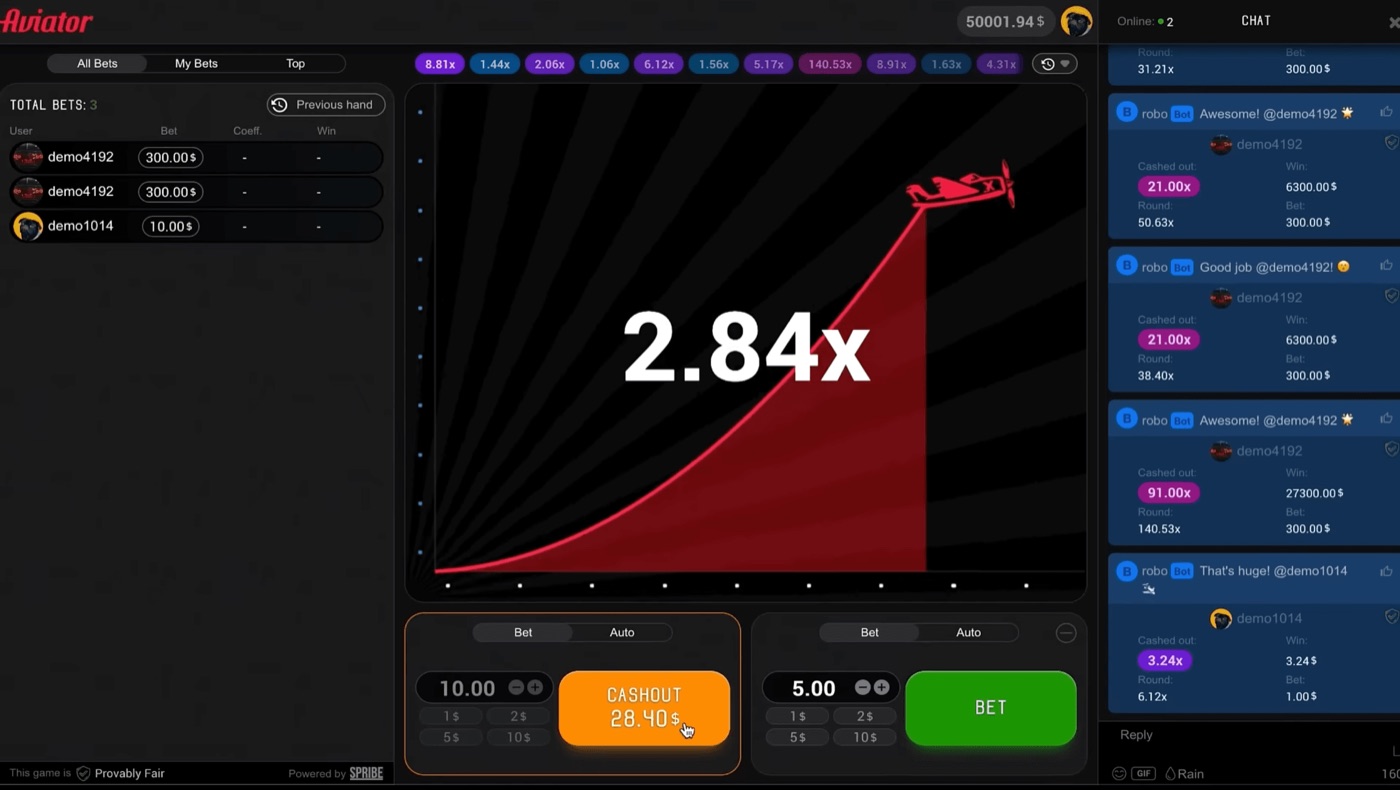
The Aviator interface shows live bets, chat and a cash-out at 28.40.
Start by identifying the round you want to check. The history at the top records previous multipliers, while the active game area shows the multiplier for the current round. Do not use a later round when checking an earlier result.
- Wait until the chosen round has finished.
- Record the multiplier shown when the plane leaves the screen.
- Note whether your bet cashed out before the crash.
- Open the Provably Fair control inside the game.
The cash-out time is important because a request must reach the server before the crash. A time-out can result from latency or a slow device, but the verification tool checks the fixed crash point rather than the delivery of a cash-out request.
How Fairness Works
Aviator publishes a SHA-256 hash of the server seed before each round. The crash point is fixed before take-off after the server seed and player client seeds are combined.
The server reveals the inputs after the round ends. The verification tool uses those revealed inputs to check the result, so neither the operator nor Spribe can change the result after the round starts.
A hash is a compact digital value created from the hidden server seed. Before the round, you can see the hash but not the server seed itself. That arrangement prevents the published value from revealing the seed in advance while leaving a record for later checking.
- The server creates a server seed.
- The game publishes the SHA-256 hash of that seed.
- Client seeds from players are combined with the server seed.
- The game fixes the crash point before the plane takes off.
- The server reveals the inputs after the round.
- The tool checks whether the revealed inputs produce the displayed result.
The check does not forecast another multiplier. Rounds are independent, and prediction is impossible because the crash point is committed by hash before the round begins. A pattern in the history cannot change the next round’s calculation.
Open The Verification Tool
The in-game verification tool displays the inputs for one completed round. The Provably Fair badge provides the route to that check inside the Aviator interface.
The round result appears as a multiplier such as 1.91x, while the tool exposes the values used to verify it. The exact screen layout can depend on the operator’s implementation, but the verification purpose remains the same.
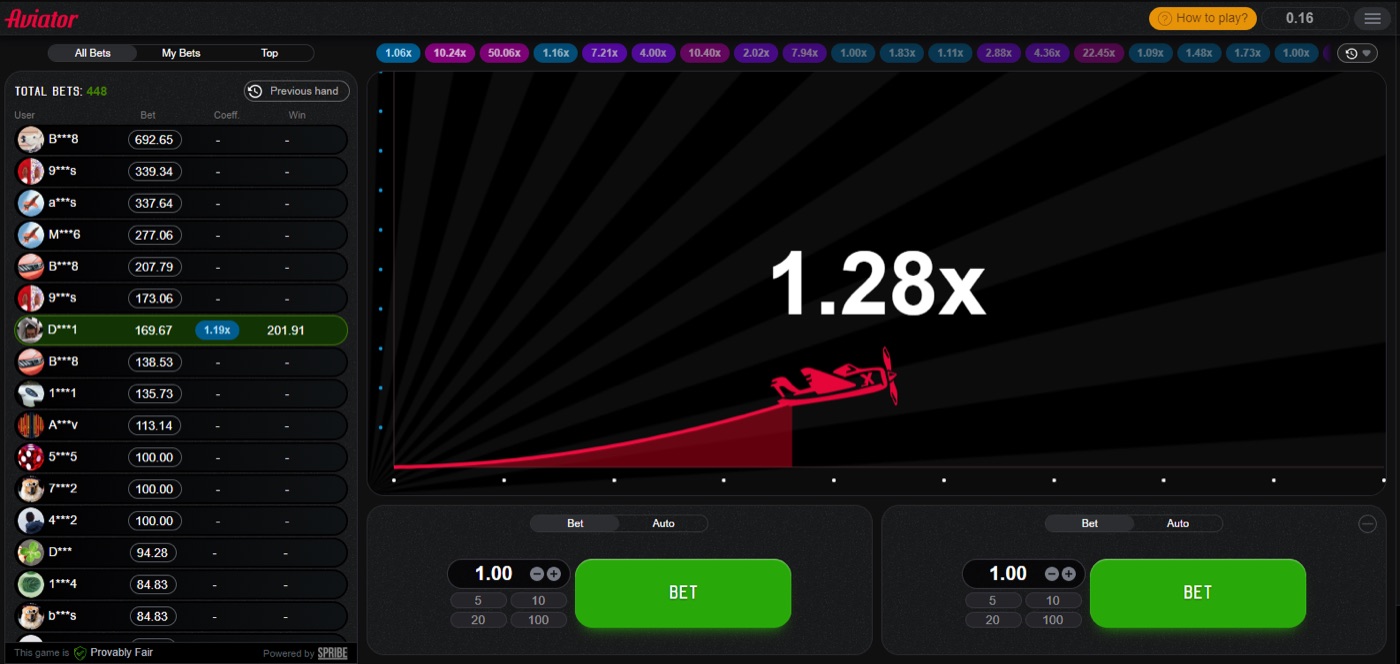
The game screen shows the plane in flight before the round ends.
Use the following sequence after a round has ended. Keep the original displayed multiplier visible if the interface allows it, because you need to compare that value with the result returned by the tool.
- Select the Provably Fair badge or the matching verification control.
- Choose the completed round you want to inspect.
- Read the published server-seed hash connected to that round.
- Open the revealed server seed and client-seed fields.
- Run the in-game verification action.
- Compare the calculated crash point with the round multiplier.
The tool verifies one round at a time. A separate check is needed for another round because each round uses its own server-seed process and its own fixed crash point.
For a crash game, players may compare a multiplier or cash-out record while looking for information such as aviator apk download latest version ios, but an external download does not verify an Aviator round.
Compare The Round Values
The verification result should match the completed round’s multiplier. A 1.91x result, for example, means the plane reached 1.91 times the starting multiplier before the crash.
The displayed result and the calculated result must refer to the same round. A mismatch between rounds does not demonstrate a failed verification because each round has different inputs.
| Item | What to check | Why it matters |
|---|---|---|
| Round multiplier | The number shown when the round ended | It is the visible result to compare |
| Server-seed hash | The SHA-256 value published before the round | It records the committed hidden seed |
| Server seed | The value revealed after the round | The tool uses it for the later check |
| Client seeds | The player inputs combined with the server seed | They form part of the round calculation |
| Calculated crash point | The value returned by verification | It should match the displayed multiplier |
Check the hash before treating the calculation as complete. The revealed server seed should produce the same SHA-256 hash that was published before the round, and the combined inputs should produce the displayed crash point.
- Confirm that the selected round is the intended round.
- Compare the pre-round hash with the hash of the revealed server seed.
- Confirm that the client-seed values belong to that round.
- Check the calculated crash point against the displayed multiplier.
- Record any mismatch before leaving the verification screen.
Verification does not show that a chosen cash-out target was likely to win. It only checks the result already generated for that round. Aviator has a 97% RTP and a 3% house edge, so the check does not remove the game’s mathematical edge.
Use The Result With Bets
Aviator gives each round two bet panels with separate cash-outs. The Bet and Auto tabs control how a stake is placed, while Auto Cash-Out can use a preset multiplier.
The game also offers Auto Bet or Auto Play for 10-100 rounds, with stop-on-win and stop-on-loss settings. These controls automate actions, but they do not alter the verified crash point or the 3% house edge.
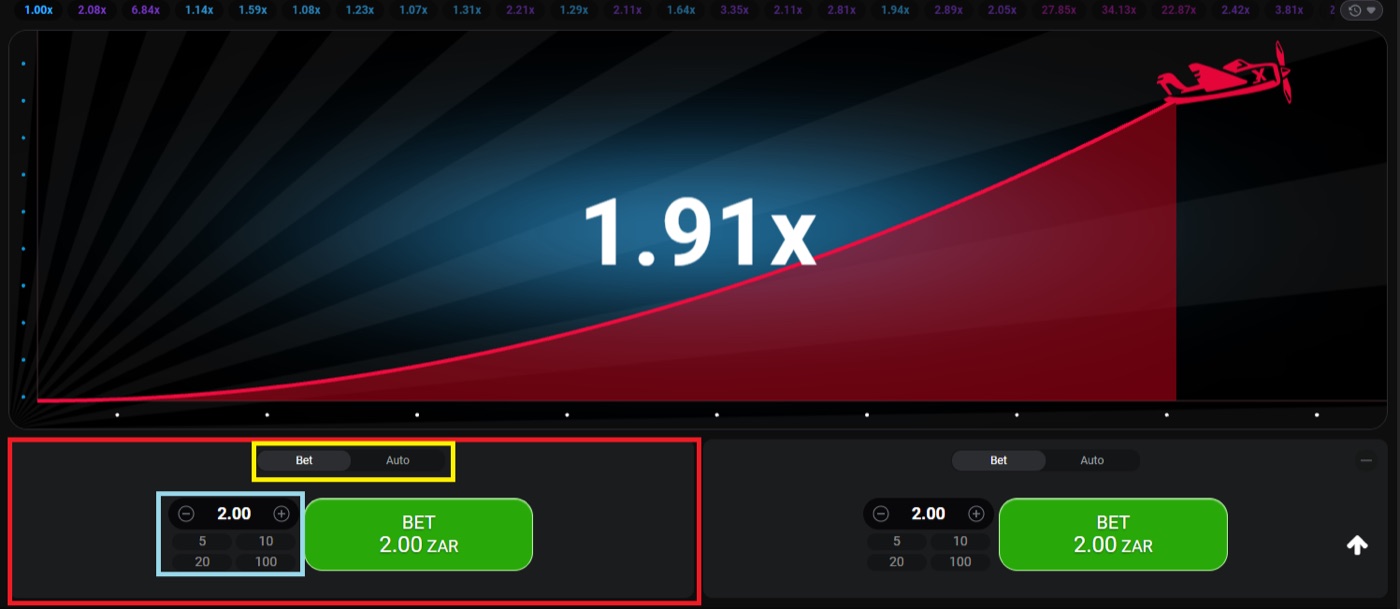
A desktop Aviator round shows 1.91x and two separate bet panels.
Use the verification result to understand what happened to a completed bet. For example, if a panel used Auto Cash-Out at 1.50x and the verified crash point was 1.91x, the target was reached before the crash. If the verified crash point was 1.20x, that target was not reached.
- A 1.50x target needs the round to reach 1.50x.
- A 2x target needs the round to reach 2x.
- A 5x target needs the round to reach 5x.
- A target above the verified crash point cannot cash out successfully in that round.
The probability that a round reaches multiplier m is 0.97 divided by m. The listed probabilities are 80.8% at 1.2x, 64.7% at 1.5x, 48.5% at 2x, 32.3% at 3x, and 19.4% at 5x.
About 3% of rounds crash instantly at 1.00x, which is roughly 1 in 33 rounds. A verification result showing 1.00x confirms that the round ended at that value; it does not make the next round more likely to reach a higher multiplier.
Responsible gambling means setting a loss limit before staking and stopping when that limit is reached.
Read Common Outcomes
Aviator’s expected value is -3% of the stake at every cash-out target. Strategy changes variance, but it does not change the house edge.
The game is high variance, and 60-90 rounds can occur in an hour. A verified result therefore explains one event without proving a pattern across later rounds.
Example: one verified round
Assume the selected round displays 1.91x after the plane leaves. A player used one panel with a 1.50x Auto Cash-Out and another panel with a 5x target.
- The tool reveals the server seed and the client-seed inputs.
- The hash check confirms that the revealed server seed matches the published hash.
- The calculation returns a crash point of 1.91x.
- The 1.50x target was reached before the crash.
- The 5x target was not reached because 1.91x is below 5x.
This example separates verification from betting analysis. The tool confirms the round’s 1.91x result, while the two targets explain why the panels had different outcomes.
Values to remember
- 1.2x: 80.8% probability of reaching the multiplier.
- 1.5x: 64.7% probability.
- 2x: 48.5% probability.
- 3x: 32.3% probability.
- 10x: 9.7% probability.
- 100x: 0.97% probability.
These percentages describe the probability of reaching a multiplier, not a guarantee for an individual round. They also do not replace the round-specific verification result shown by the in-game tool.
Aviator FAQ
Aviator uses a SHA-256 server-seed hash before each round. The in-game tool checks the revealed inputs after the round.
The verification process confirms the crash point for one completed round. It does not predict another result, improve the RTP, or remove the 3% house edge.
What does Aviator verification prove?
It checks that the revealed server seed matches the SHA-256 hash published before the round and that the combined inputs produce the displayed crash point. It proves the result for that round, not the fairness of an unrelated round.
Can the tool predict the next crash?
No. The crash point is fixed before take-off, and rounds are independent. The tool reveals and checks past inputs after the round rather than exposing future inputs.
Why did my cash-out time out?
A cash-out request must reach the server before the crash. Guides associate time-outs with latency or a slow device, while the verification tool checks the crash point itself.
Does a high previous multiplier affect the next round?
No. Previous multipliers do not change the next round’s odds. The probability of reaching multiplier m remains 0.97 divided by m.
Is there an official Aviator app for verification?
Spribe does not provide a standalone official Aviator app. Aviator runs inside a licensed operator’s website or app, and the verification tool is inside the game interface.


